
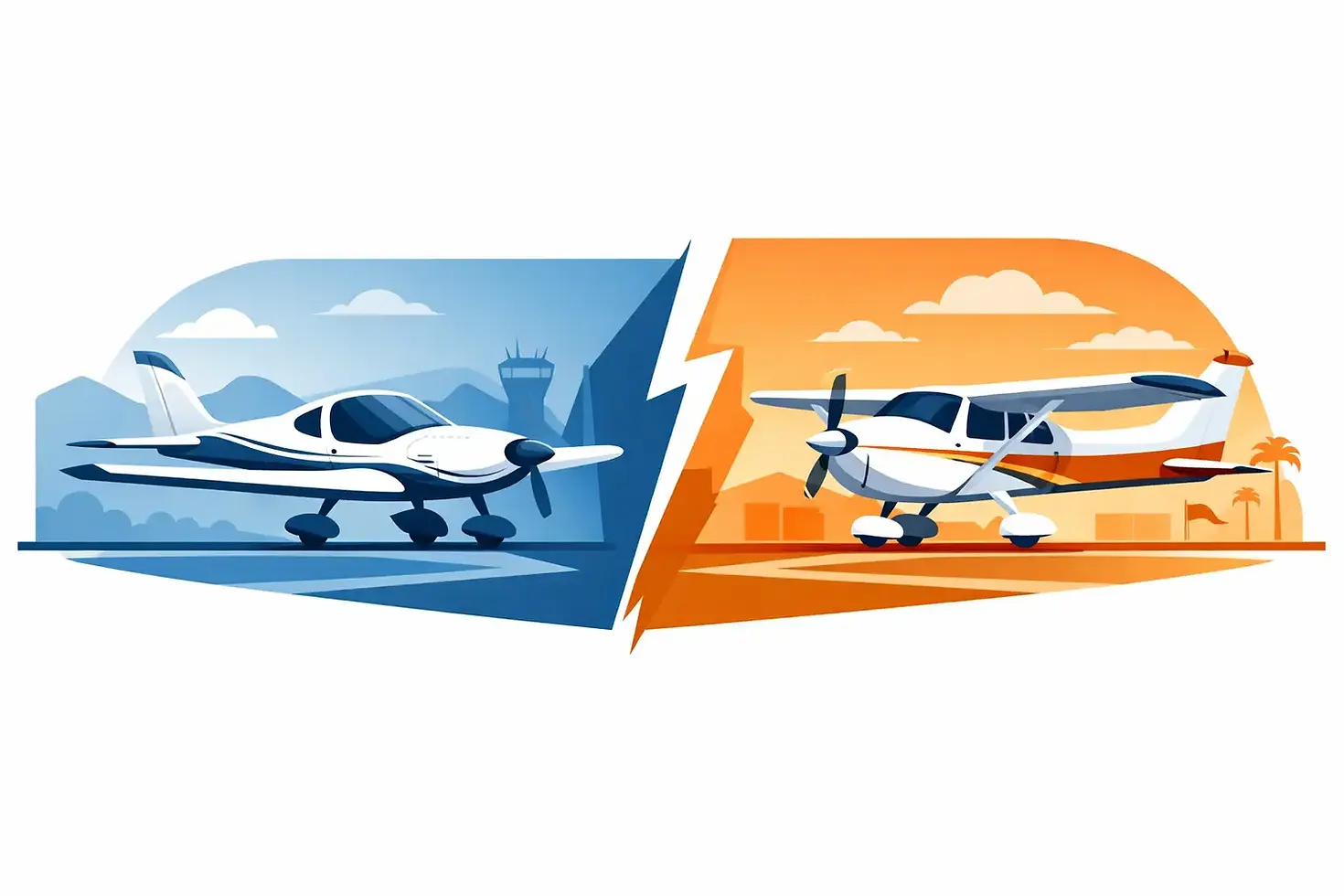
Bristell vs Cessna Trainer for New Pilots

A training aircraft shapes more than a student’s first landings. It shapes cockpit habits, scan discipline, aircraft control, and confidence under pressure. The Bristell vs Cessna trainer decision is not about declaring one airplane universally better. It is about selecting an environment that supports disciplined learning, matches the mission, and prepares a pilot to make sound decisions beyond the checkride.
For many pilots, a Cessna 172 is the familiar reference point. It has trained generations of aviators and remains common at schools across the country. A modern Bristell offers a different proposition: responsive handling, strong visibility, contemporary avionics, and an efficient platform for focused training and hour building. Both can be valuable teachers when operated with consistent standards and good instruction.
Bristell vs Cessna Trainer: Start With the Mission
The first question should be what the airplane needs to accomplish. A new student pursuing a private pilot certificate needs a stable platform, a clear training syllabus, and an instructor who will build judgment rather than rush through maneuvers. An advancing pilot may place more value on efficient flight time, modern avionics exposure, and availability for longer cross-country flights.
A Cessna trainer usually means a 150, 152, or 172, although the 172 is the comparison most prospective students have in mind. These aircraft have broad training histories, predictable handling, and widespread familiarity among instructors, mechanics, examiners, and rental operations. Their availability can be a meaningful advantage, especially for a pilot who expects to rent at different airports after training.
Bristell aircraft vary by model and certification category, so a direct comparison requires more than looking at the name on the cowling. The specific aircraft’s weight limits, equipment, maintenance status, approved operating limitations, and school policies all matter. A responsible school should explain exactly what students can train for in a particular airplane and how that training fits their certificate goals.
Cockpit Design and Avionics Change the Learning Experience
A traditional Cessna cockpit can range from six-pack instruments with basic navigation equipment to a modern glass panel. The 172’s panel layout is familiar and generally spacious, but its actual training value depends heavily on the individual airplane’s avionics and condition. A well-maintained, updated Cessna remains a capable classroom.
Many Bristell training aircraft present a more contemporary cockpit experience. Glass displays can make information easier to organize, particularly when a student is learning how altitude, airspeed, navigation, engine data, and traffic awareness relate to one another. Modern instrumentation also better resembles the systems many pilots will encounter in newer general aviation aircraft and airline-oriented training environments.
That does not mean glass avionics make flying easier. They can create new opportunities for distraction if a student spends too much time looking down. The right training approach treats the display as a tool, not an authority. Students still need an outside visual scan, a disciplined instrument cross-check, and the ability to recognize when automation is helping and when it is adding workload.
A good instructor will also make sure a pilot understands the underlying flight principles. Airspeed, angle of attack, power, pitch, wind correction, and energy management do not change because the panel is digital. The display may be modern, but sound airmanship remains foundational.
Visibility and Seating Matter More Than They First Appear
Bristell aircraft are often appreciated for their visibility and more modern cabin feel. Strong outside sightlines can help early students develop traffic awareness, improve runway alignment, and build a more natural relationship with the airplane’s position relative to the horizon.
Cessna high-wing aircraft offer a different visual advantage. The wing provides shade and can make entry and exit straightforward, while the high-wing design gives a clear view below the airplane during many maneuvers. The wing can also block part of the view when looking into a turn, which is why clearing turns and deliberate traffic scans are non-negotiable.
Neither configuration removes the need for active visual scanning. Students should learn to move their eyes with purpose, clear before maneuvering, and understand where their aircraft’s blind spots are. That habit matters far more than whether the wing sits above or below the cabin.
Handling: Stable Does Not Mean Better, Responsive Does Not Mean Harder
Cessna trainers earned their reputation because they are generally forgiving, stable, and predictable. Those qualities can help a new student concentrate on procedures, radio work, and the basic rhythm of operating around an airport. The airplane gives useful feedback without making every small control input feel dramatic.
A Bristell often feels more responsive and direct. For a student, that can make the connection between control input and aircraft response easier to understand. It can also demand greater precision. Small corrections, coordinated use of rudder, and stable pitch control become more noticeable. In disciplined training, that is an advantage rather than a drawback.
The trade-off is that no aircraft should be judged only by how enjoyable it feels on a smooth day. A pilot needs to learn to manage changing winds, imperfect approaches, unexpected radio calls, and the temptation to force a landing when conditions are not right. A responsive airplane can sharpen a pilot’s control, while a stable platform can reduce early workload. The instructor’s standards determine whether either experience produces real progress.
Landings Reveal Training Standards
Students sometimes assume one trainer is easier to land than another. The more useful question is whether the school teaches repeatable landing decisions. Proper airspeed control, a stabilized approach, crosswind correction, go-around discipline, and runway awareness matter in every trainer.
A lighter, responsive aircraft may require a student to be more attentive to gusts and energy changes. A larger, heavier Cessna may feel more settled in some conditions, but it still requires accurate technique. Neither airplane excuses a rushed approach or a casual attitude toward crosswind limits. The right lesson is not to chase perfect landings. It is to recognize an unstable situation early and make the conservative decision.
Payload, Range, and Scheduling Affect Training Value
Training flights are not always flown solo with an instructor and half fuel. A student may want to take a family member after earning a certificate, plan a longer cross-country, or build time with another pilot. That is where useful load, fuel capacity, and performance planning become practical rather than theoretical.
The Cessna 172 is often valued for its cabin space and established utility, but actual useful load varies substantially by year, model, installed equipment, and empty weight. A newer avionics package is beneficial, yet it can also affect payload. The same principle applies to Bristell aircraft. Do not rely on a brochure figure or another pilot’s experience. Use the weight-and-balance data for the exact tail number you intend to fly.
For students, this is a valuable lesson in command responsibility. A legal loading may not always be the most comfortable or conservative loading, especially in warm weather, at higher density altitudes, or with a short runway. Flight planning is not paperwork completed to satisfy an instructor. It is a decision-making process that starts before the engine starts.
Aircraft availability also has a direct effect on cost and momentum. A student who flies consistently tends to retain skills better and spends less time re-learning prior lessons. A lower hourly rate is not automatically the better value if limited availability creates long gaps between flights. Ask how the school schedules aircraft, handles maintenance downtime, and protects continuity when a student is ready to train.
The Best Trainer Is Supported by a Strong System
An aircraft is only one part of the training environment. Maintenance practices, instructor continuity, lesson planning, weather minimums, preflight expectations, and postflight debriefs all shape the pilot a student becomes.
At Lumina Aviation, modern Bristell aircraft are part of a larger commitment to structured, safety-first training. The goal is not simply to move students through required tasks. It is to help them become thoughtful aviators who can assess risk, communicate clearly, and remain calm when a flight does not go exactly as planned.
A Cessna may be the right choice for a pilot who values a familiar, widely available platform or expects to transition easily into a traditional rental fleet. A Bristell may be the right choice for a pilot who wants contemporary avionics, a responsive aircraft, and an efficient path toward confident proficiency. For many students, either can be an excellent starting point.
Before choosing, sit in the actual aircraft, review its equipment, ask how the school teaches go-arounds and weather decisions, and learn what happens when maintenance interrupts the schedule. The airplane should feel like a capable training tool, but the school’s standards should give you the greater confidence. Choose the place that will teach you not just how to fly the airplane, but when to pause, reassess, and make the right call.


Comments