
Glass Cockpit Flight Training Explained

The first time a new student sits behind a modern flight display, the reaction is usually the same - excitement followed quickly by questions. There is more information available, more automation to understand, and a different rhythm to how you scan, brief, and manage the airplane. That is why glass cockpit flight training matters. It is not about making flying easier through screens alone. It is about learning to process information correctly, stay ahead of the aircraft, and make disciplined decisions in a modern cockpit.
What glass cockpit flight training actually teaches
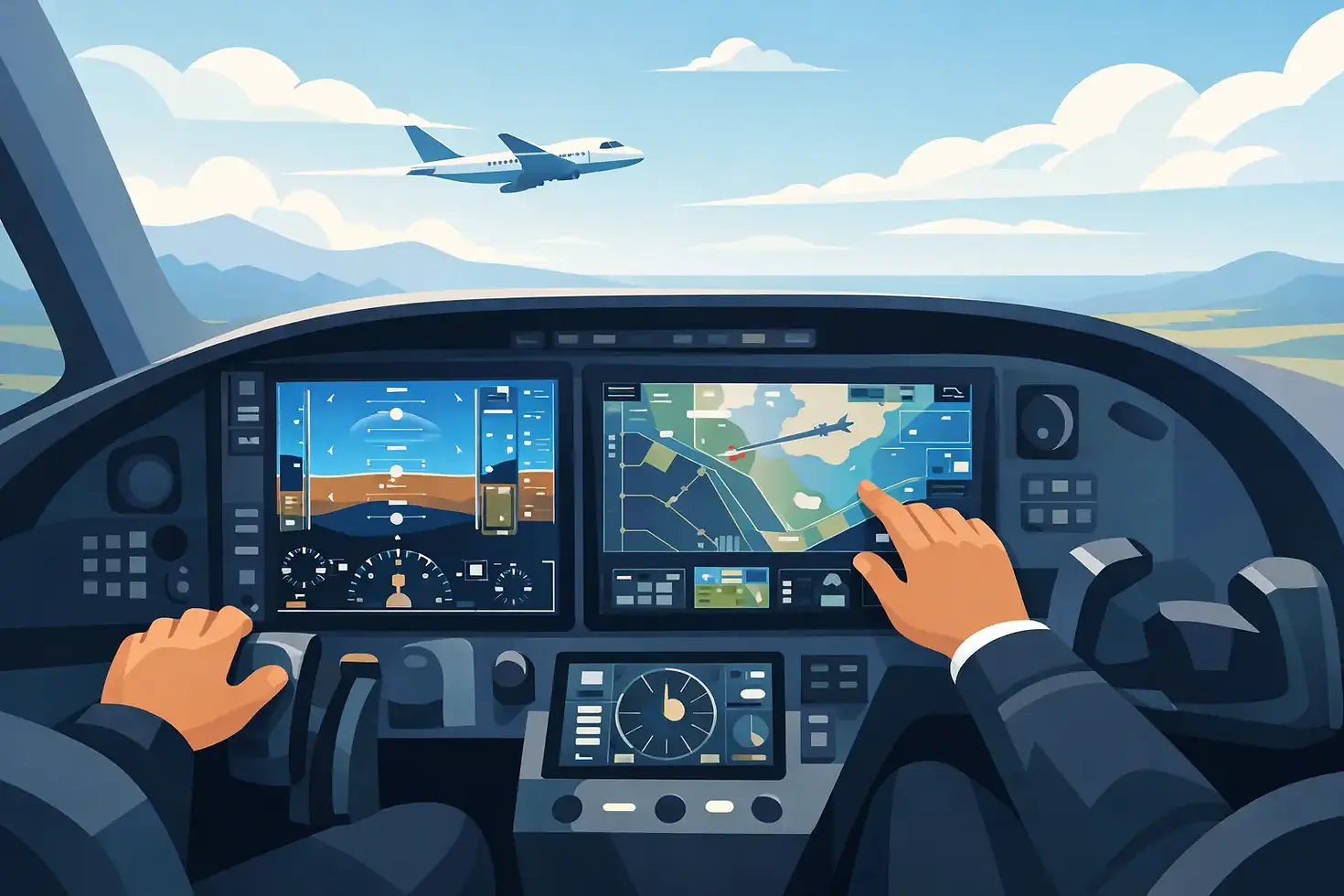
A glass cockpit replaces many traditional round gauges with integrated digital displays. Instead of checking separate instruments one by one, the pilot uses a primary flight display and a multifunction display to monitor attitude, altitude, airspeed, navigation, engine data, and situational information.
That sounds straightforward until you are flying, talking, navigating, and managing workload at the same time. Good glass cockpit training is not a lesson in button pushing. It teaches you how to prioritize. First fly the airplane. Then confirm what the displays are telling you. Then use avionics and automation in a way that supports good judgment rather than replacing it.
For newer pilots, this is often the biggest shift. A glass panel can reduce ambiguity, but it can also create distraction if the student starts chasing data instead of maintaining control. A disciplined training program keeps the focus on attitude control, trim, power, and situational awareness first. The technology comes second, in the right order.
Why modern avionics change the training experience
Students who train in a glass cockpit often gain early familiarity with the equipment they are likely to see later in technically advanced aircraft and many professional flight environments. That has real value. You are not treating avionics as a future add-on. You are building your habits around current systems from the beginning.
There is also a safety benefit when the training is structured well. Modern displays can present trend information, traffic awareness tools, engine monitoring, and clearer navigation data. Used properly, those features support better decisions and a more stable workload.
Still, there is a trade-off. More information does not automatically mean better performance. A student can become heads-down, overconfident in the display, or too dependent on automation. That is why mentor-led instruction matters. The goal is not to create a pilot who knows where to tap on a screen. The goal is to develop a thoughtful aviator who understands what the airplane is doing, why it is doing it, and what to do when the display, the automation, or the plan stops helping.
Glass cockpit does not mean lower standards
Some students assume a modern panel will make training faster or easier. Sometimes it helps with clarity. Sometimes it adds complexity, especially early on. A digital attitude display may be easier to interpret than older instruments, but avionics setup, menu logic, and autopilot modes introduce new tasks.
The right expectation is not shortcut training. It is better-aligned training for the aircraft environment many pilots will actually use. Standards still matter. Checklists still matter. Basic stick-and-rudder control still matters.
The core skills you should build first
In strong glass cockpit flight training, the student learns a few habits early that shape everything else.
The first is an efficient scan. In a traditional panel, students are taught to move across several instruments in a deliberate pattern. In a glass cockpit, the scan changes, but the discipline remains. You still need to confirm pitch, bank, airspeed, altitude, and course, only now you are interpreting integrated information without fixating on one part of the display.
The second is mode awareness. If your avionics or autopilot are engaged, you must know exactly what is armed, what is active, and what the system will do next. Confusion here causes preventable errors. Students should learn to verbalize modes and expected behavior rather than assume the airplane will do what they intended.
The third is workload management. A modern panel gives you powerful tools, but timing matters. Entering a route, adjusting display layers, or changing frequencies is easy when the airplane is stable and you have time. It is a poor choice when you are behind the airplane in a climb, traffic pattern, or weather-related reroute. Knowing when not to touch the screen is part of sound airmanship.
The fourth is reversion to fundamentals. If a display fails, freezes, distracts you, or simply creates uncertainty, you fall back on pitch, power, trim, and basic navigation judgment. Students should practice that mindset early so the panel remains a tool, not a crutch.
How glass cockpit flight training should be taught
The best training follows a clear progression. Early lessons should introduce the displays in a calm, manageable way while keeping the student focused on aircraft control and outside references. As confidence grows, the instructor can layer in navigation functions, system setup, abnormal indications, and eventually automation management.
That progression matters because students do not learn well when every capability is introduced at once. A mentor-focused instructor narrows the lesson to what is needed for that stage of training. One flight may focus on basic display interpretation and scan discipline. Another may emphasize flight planning, course changes, and cockpit organization. Later flights can incorporate scenario-based decisions where the avionics support, but do not dictate, the outcome.
This is also where standardization makes a difference. When instructors teach flows, callouts, and avionics procedures consistently, students build confidence faster and with less confusion. They are not relearning a different cockpit philosophy every lesson. They are making real progress along a clear path.
Who benefits most from training in a glass cockpit
Beginners often benefit because modern displays can make aircraft attitude, altitude trends, and navigation information easier to interpret once the initial learning curve is managed properly. For a student planning to continue into instrument training or a professional pathway, early exposure to integrated avionics can be especially useful.
Pilots building hours also benefit when they want to stay current in aircraft equipped with modern avionics. Time building is not just about accumulating numbers in a logbook. Done properly, it is a chance to sharpen systems management, cross-country planning, and cockpit discipline in equipment that reflects current aviation practice.
That said, the answer is not identical for everyone. Some students feel more comfortable first understanding basic instrument concepts in a simpler environment. Others take naturally to digital displays right away. A good school does not force a one-size-fits-all approach. It matches instruction to the student while maintaining the same training standards.
What to look for in a school offering glass cockpit training
The airplane matters, but the training culture matters more. A modern panel in a poorly organized training environment can create bad habits just as quickly as it can build good ones.
Look for instructors who teach judgment, not just procedures. Look for a school that can explain how it standardizes training, maintains its aircraft, and introduces avionics in stages rather than as a sales feature. Transparent pricing helps too, because students learn better when they are not worried about being rushed into unnecessary flights or upgrades.
It is also worth paying attention to the cockpit environment itself. Students progress best when the atmosphere is calm, professional, and structured. That is especially true with advanced avionics, where too much pressure can turn a useful tool into a source of task saturation.
At a school like Lumina Aviation, that kind of environment is part of the training value. Modern aircraft and glass panels are important, but they only deliver their full benefit when paired with disciplined standards and patient instruction.
A modern cockpit should build better pilots
The real purpose of glass cockpit training is not to impress a student with technology. It is to help build a pilot who can interpret information clearly, manage workload with discipline, and make sound decisions when conditions change.
That is why the conversation should always go beyond displays and features. Ask whether the training helps you become more organized. Ask whether you are learning to stay ahead of the airplane. Ask whether your instructor is helping you understand not just what button to press, but why that action supports safety and control.
When glass cockpit flight training is done the right way, it prepares you for more than your next lesson. It builds the habits that carry forward into instrument flying, cross-country planning, time building, and eventually the higher levels of responsibility aviation demands. The screens may be modern, but the standard is timeless - fly with discipline, think ahead, and let good judgment lead the cockpit.


Comments